Espero que todos estéis bien. Como no sabemos cuánto tiempo va a durar esta cuarentena me gustaría pediros que me hagáis llegar los deberes por email. Mi cuenta de correo es
andres.martinez4@educa.madrid.org
¿CÓMO ENVÍO MIS DEBERES?
Tienes varias opciones:
Haz fotos de los ejercicios del activity book y de tu cuaderno y envíamelas.
Escribe tus respuestas en un documento de word. no hace falta escribir el enunciado, solo la página y el número de actividad.
Tus trabajos de investigación (exchange rates, investigate one EU country, population pyramids…) puedes hacerlos a mano y mandarme una foto o puedes hacerlos en word o powerpoint.
Muchos compañeros y compañeras no me escriben nunca, si habláis entre vosotros, recordad a todo el mundo que todos estos trabajos hay que hacerlos ¡¡¡no estamos de vacaciones!!!
Un saludo y suerte con esta cuarentena.
ANDRÉS
(Escribe OK en los comentarios si has leído esta publicación para que yo sepa quiénes están siguiendo el blog con asiduidad)
My plan for our next Arts and Crafts activity is introducing you to the world of photography.
We take photos every day with our smartphones. However, not all the photos we take are good. Photography is an art and you need to learn how to take GOOD photos.
Today we are going to learn a basic rule: the rule of thirs (regla de tercios).
Before taking a photo, we Iook at the scene and divide it with three imaginary horizontal and vertical rows and columns.
Then, we put our objet in one of the sides, leaving the rest of the space as Negative Space or Blank space
(Antes de hacer una foto, miro la escena y la divido con mi imaginación en tres filas y tres columnas, después pongo el objeto que voy a fotografiar en uno de los lados y dejo el resto del espacio en blanco)
Look at these pictures:
These are examples of good photographs. The main object (the dog, the house and the tree) are not in the centre, they are in one of the intersections on the sides. This way we pay them more attention.
And now watch this video
Start practicing with things around your house. In some days I will propose you a challenge!
In this SCIENCE unit we are learning about populations.
Today I share with you some information about population pyramids.
First, watch this video
IMPORTANT FACTS (DATOS IMPORTANTES)
Male appear on the left side and female on the right (hombres aparecen a la derecha y mujeres a la izquierda)
Horizontal axis (línea horizontal): Number of people (número de gente)
vertical axis (línea vertical): different ages (diferentes edadades)
You can see if the population of a country has more elderly or young people (puedes ver si hay más gente mayor o joven en un país)
you can compare male and female (puedes comparar hombres y mujeres)
you can compare with other countrys’ pyramids (puedes comparar con las pirámides de otros países)
we can see the past, present and also predict the future (podemos ver el pasado, el presente y predecir el futuro)
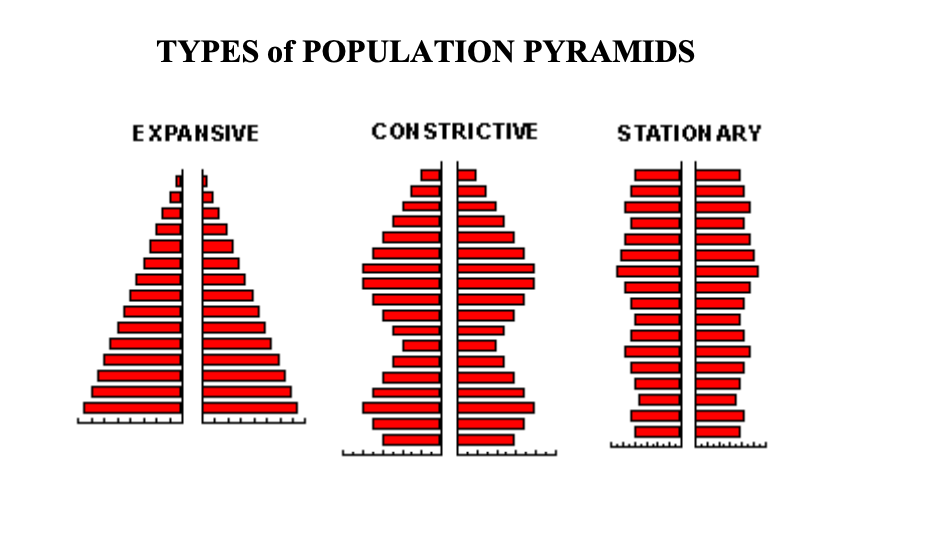
Expansive: there are a lot of young people and it decreases progressively. There is high infant mortal rate. These are typical pyramids in underdeveloped countries.
Expansiva: más jóvenes que mayores. Decrece. Alta mortalidad infantil. Típicas de países poco desarrollados.
Contrictive: A lot of adults. Less elderly and infants. Typical of developed countries.
Constrictiva: muchos adultos y menos ancianos y niños. Típicas de países muy desarrollados.
Stationary: well balanced: equal number of every age.
Estacionaria: bien equilibrada. mismo número en todas las edades.
In this Unit we are learning about the European Union. The EU is a group of 27 countries. You are going to investigate one of these countries. Here is a list of things your work should have:
Geographical facts:
political geography: capital and most important cities, number of inhabitants and population density.
Physical geography: seas/oceans, most important rivers and mountains, types of landscapes, climate (you can include a climate graph)
Political facts:
system of government (monarchy, republic…)
name of president.
currency used.
cultural facts:
typical food (you can include the recipe to prepare it)
Most popular sports and players
One famous monument (when was it built? by whom?, where can you visit it? why is it important?)
one national park (what species of plants or animals live there?=)
RESOURCES (Recursos)
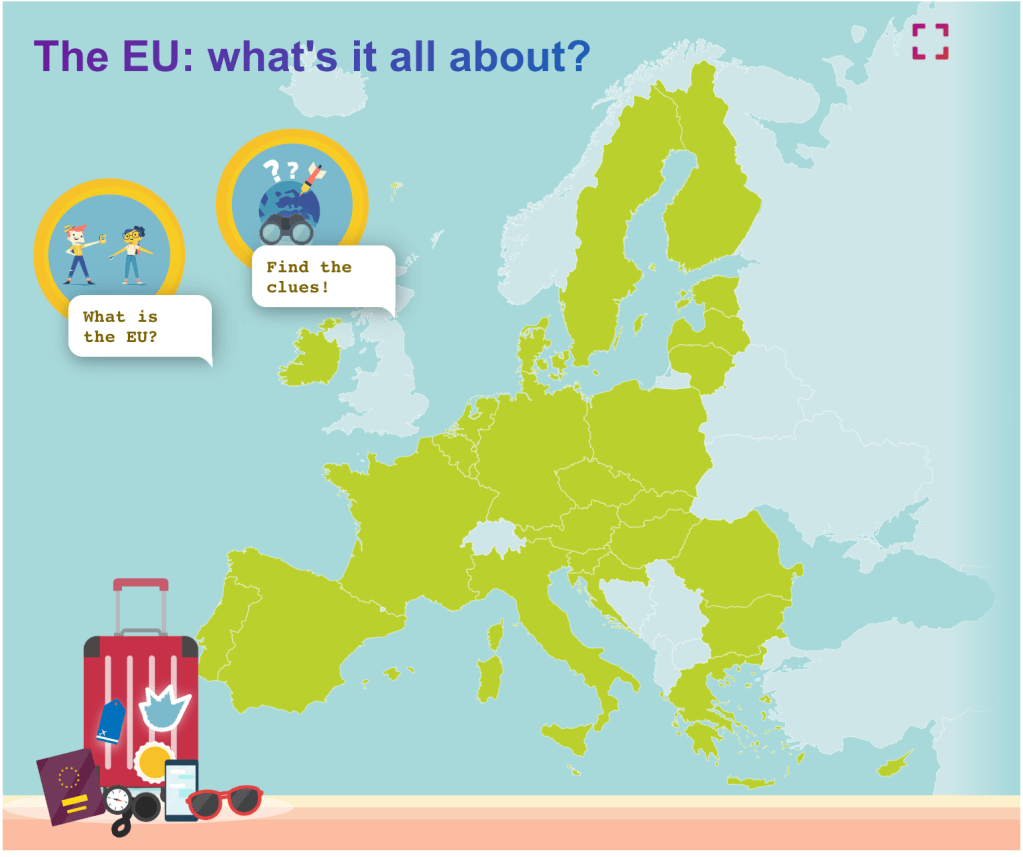
This is a resource from the EU official website. Here you can find lots of information. Click in each country to discover more about them.
Debes encontrar información sobre todos los puntos que he puesto arriba. La forma de presentación es libre:
Puedes hacer el trabajo en forma de redacción (a mano o a ordenador), puedes hacer un esquema, puedes incluir fotografías, si lo haces a ordenador puedes incluir links a vídeos.
También puedes añadir otros datos si te resultan interesantes (curiosidades, anécdotas, historia…)
IMPORTANTE: ESTÁ PROHIBIDO COPIAR Y PEGAR DATOS DE WIKIPEDIA. Puedes utilizar Wikipedia solo para buscar datos clave como número de habitantes o capital.
Las páginas web que yo te he dado son un ejemplo, intenta buscar otras fuentes de información por tu cuenta.
Por último, te agradecería si puedes escribir en los comentarios qué país vas a investigar (así puedes ver los que hacen tus compañeros/as y no repetir muchos países.
One of your homework is to write a letter for a time capsule.
Here I found some interesting videos about time capsules. Watch them to practice your listening skills
Scientists open a capsule from 1795
2. a reveiw of 12 amazing time capsule
I hope this gave you some ideas to select an interesting object from our time to burry it (enterrar)
IDEA: Why don’t you write your letter about this Pandemia and what is happening? maybe in the future it will be interesting to know a real opinion from a kid from 2020.


 Class, Class, Yes, Yes